
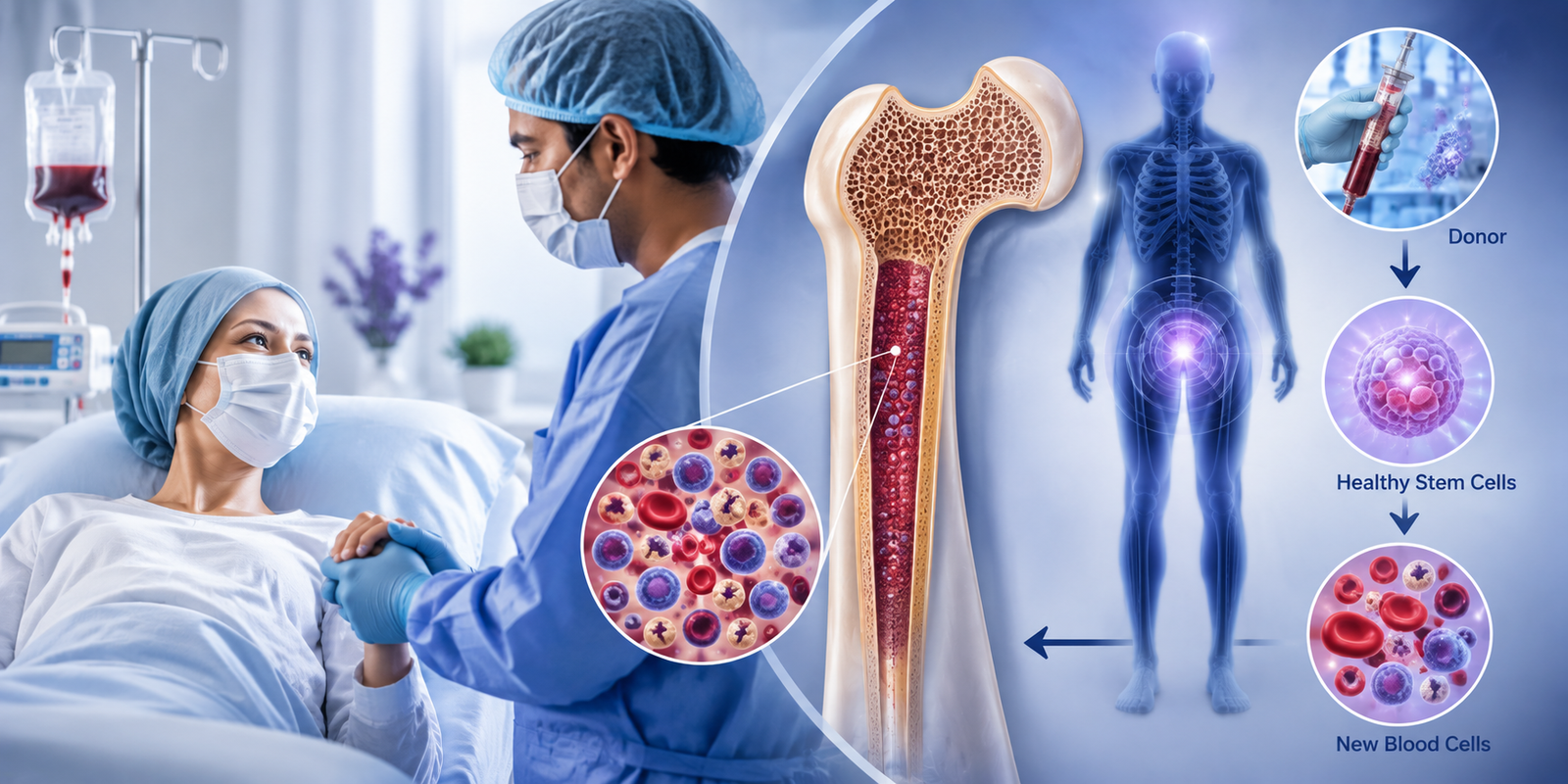
Bone Marrow Transplant (BMT), also known as Hematopoietic Stem Cell Transplantation (HSCT), is a specialized treatment that replaces damaged or diseased blood-forming stem cells with healthy stem cells. It is used for certain blood cancers, bone marrow disorders, and immune system conditions. Depending on the patient's condition, the transplant may use the patient's own stem cells (autologous transplant) or stem cells from a compatible donor (allogeneic transplant).
Patients with Blood Cancers
Individuals with conditions such as leukemia, lymphoma, or multiple myeloma who may benefit from high-dose therapy followed by stem cell transplantation.
Patients with Bone Marrow Disorders
People with disorders that affect normal blood-cell production, such as certain bone marrow failure syndromes or myelodysplastic disorders.
Patients Requiring Donor Stem Cells
Individuals with selected high-risk or recurrent diseases for whom an allogeneic transplant using healthy donor stem cells may offer a potential treatment option.
Comprehensive Transplant Evaluation
Your transplant team performs blood tests, bone marrow examinations, imaging, organ-function assessments, and donor-matching tests when a donor transplant is planned.
Conditioning & Stem Cell Infusion
You receive conditioning treatment, which may include chemotherapy and sometimes radiation, to prepare the body for transplantation. Healthy stem cells are then infused through an intravenous line.
Engraftment & Long-Term Monitoring
After the infusion, the transplanted stem cells travel to the bone marrow and begin producing new blood cells. Close monitoring, infection prevention, nutritional support, and regular follow-up are provided throughout recovery.
Need Expert Medical Guidance?
Your Treatment Journey
Before Procedure
- You will undergo detailed medical and transplant assessments to determine whether BMT is appropriate for you.
- If an allogeneic transplant is planned, your medical team will search for and evaluate a suitable donor based on tissue compatibility.
- You may receive conditioning therapy before the transplant and may require placement of a central venous catheter for treatment and stem cell infusion.
During Procedure
- The stem cells are usually administered through an intravenous infusion, similar to a blood transfusion.
- The infusion itself may take a few hours, depending on the type and amount of stem cells being administered.
- Your medical team continuously monitors vital signs and watches for immediate reactions during the infusion.
After Procedure
- You may remain in the hospital for several weeks, particularly after an allogeneic transplant, until the new stem cells begin producing healthy blood cells.
- Fatigue, nausea, reduced blood-cell counts, and increased risk of infection are common during the early recovery period.
- Recovery can take several months, and ongoing blood tests, specialist consultations, and, after donor transplantation, monitoring for graft-versus-host disease may be required.

Get Expert Medical Guidance
Connect with our specialists and receive trusted healthcare support without delays.
Success!
Your consultation request has been submitted.