
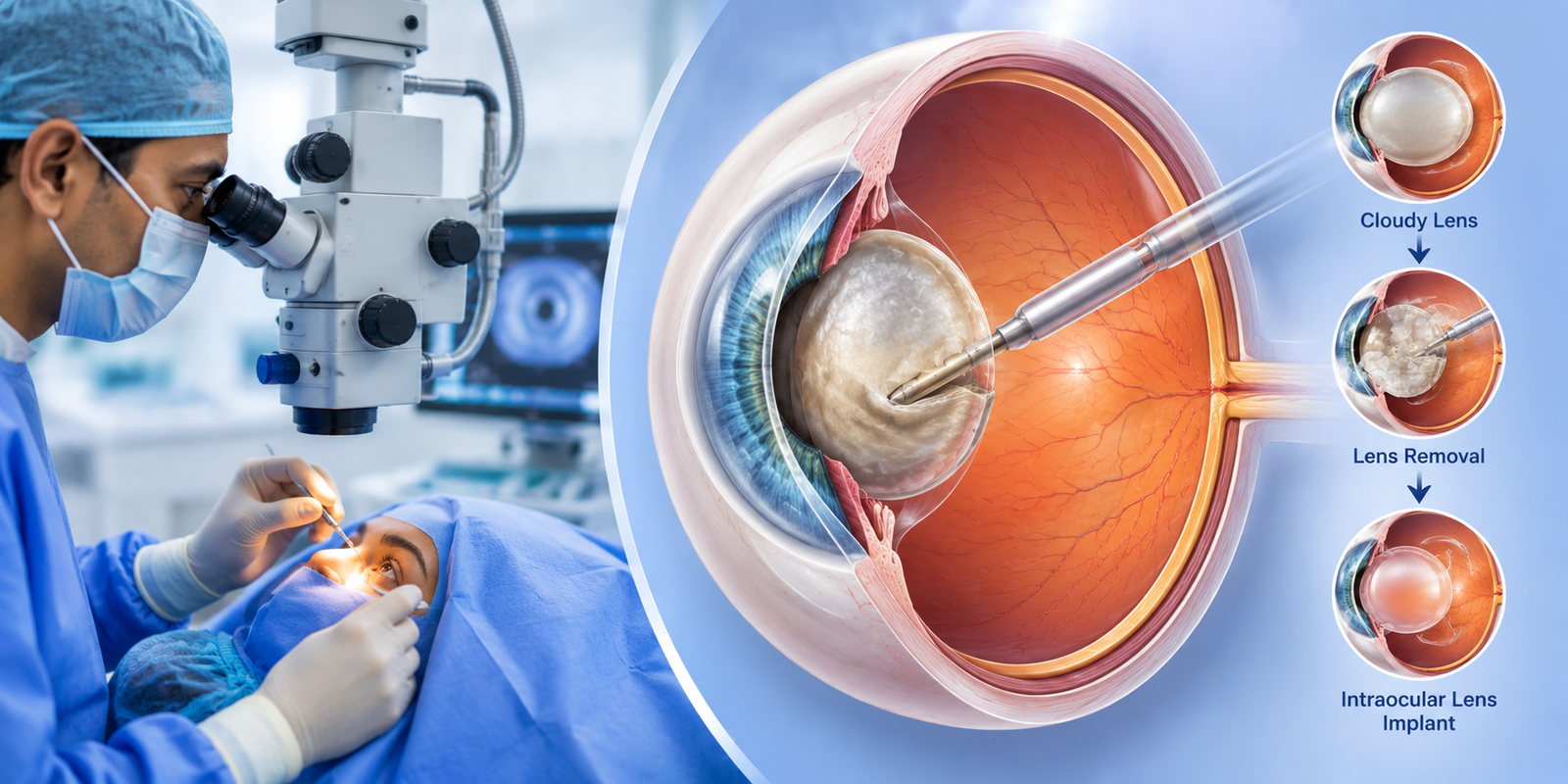
Cataract Surgery is a common eye procedure used to treat cataracts, a condition in which the natural lens of the eye becomes cloudy and causes blurred or reduced vision. During surgery, the cloudy natural lens is carefully removed and replaced with a clear intraocular lens (IOL). Modern cataract surgery is usually performed using minimally invasive techniques and can significantly improve vision and quality of life.
Patients with Cloudy or Blurred Vision
Individuals experiencing blurred, hazy, or dim vision caused by a cataract that interferes with daily activities.
Patients with Difficulty Seeing at Night
People experiencing increased glare, halos around lights, or difficulty driving and seeing clearly in low-light conditions due to cataracts.
Patients with Vision Affecting Daily Life
Individuals whose cataract-related vision loss makes reading, working, driving, or other everyday activities increasingly difficult.
Comprehensive Eye Evaluation
Your ophthalmologist examines your eyes, measures your vision, evaluates the cataract, and performs tests to determine the appropriate intraocular lens for your needs.
Cataract Removal & Lens Implantation
After numbing the eye, the surgeon makes a small incision, breaks up and removes the cloudy natural lens, and replaces it with a clear artificial intraocular lens.
Post-Surgery Monitoring & Vision Care
Your eye is examined during follow-up visits to monitor healing, eye pressure, lens position, and visual recovery while prescribed eye drops support the healing process.
Need Expert Medical Guidance?
Your Treatment Journey
Before Procedure
- You will undergo a comprehensive eye examination and measurements to select the appropriate intraocular lens.
- Your ophthalmologist will discuss available lens options, the expected visual outcome, potential risks, and post-operative care.
- You may be instructed to use specific eye drops or temporarily adjust certain medications before surgery.
During Procedure
- Cataract surgery is usually performed under local or topical anesthesia, allowing you to remain awake and comfortable.
- The procedure commonly takes around 15–30 minutes per eye.
- The cloudy lens is removed, usually using phacoemulsification, and replaced with a clear artificial intraocular lens.
After Procedure
- Mild irritation, watering, light sensitivity, or blurred vision may occur during the initial recovery period.
- Vision often begins improving within a few days, although complete stabilization can take several weeks.
- Prescribed eye drops and follow-up examinations are important to prevent infection, monitor healing, and ensure the implanted lens remains properly positioned.

Get Expert Medical Guidance
Connect with our specialists and receive trusted healthcare support without delays.
Success!
Your consultation request has been submitted.