
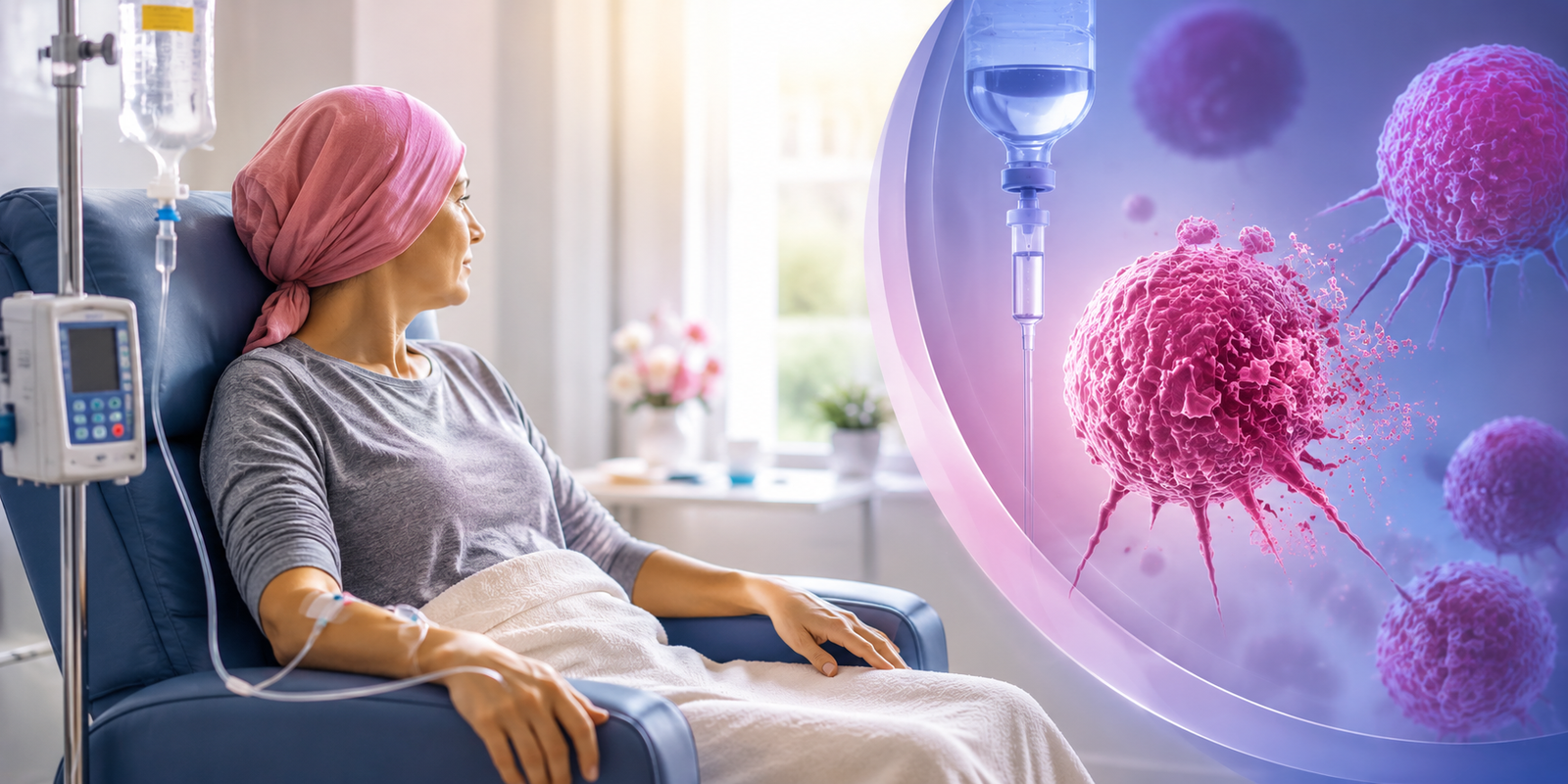
Chemotherapy is a cancer treatment that uses powerful medicines to destroy cancer cells or slow their growth and spread. It may be used as the primary treatment, before surgery to shrink a tumor, after surgery to reduce the risk of recurrence, or together with radiation therapy and other cancer treatments. Depending on the type of cancer, chemotherapy may be administered intravenously, orally, or through other specialized methods as part of an individualized treatment plan.
Patients with Cancer Requiring Systemic Treatment
Individuals with cancers that may respond to chemotherapy, including certain blood cancers and solid tumors.
Patients with Advanced or Spreading Cancer
People whose cancer has spread to other parts of the body and requires systemic treatment to control cancer cells throughout the body.
Patients Undergoing Combined Cancer Treatment
Individuals who may benefit from chemotherapy before or after surgery, alongside radiation therapy, or in combination with targeted or other cancer treatments.
Comprehensive Cancer Evaluation
Your oncology team reviews your cancer type, stage, biopsy results, previous treatments, overall health, and blood tests to determine the most appropriate chemotherapy plan.
Personalized Chemotherapy Treatment
Chemotherapy medicines are administered according to the prescribed treatment plan, commonly through an intravenous infusion or oral medication. The dose and combination of medicines are tailored to the individual.
Treatment Monitoring & Supportive Care
Your medical team monitors blood counts, organ function, treatment response, and side effects while providing supportive medicines to help manage treatment-related symptoms.
Need Expert Medical Guidance?
Your Treatment Journey
Before Procedure
- You will undergo blood tests and other medical assessments to ensure you are ready for treatment.
- Your oncologist will explain the chemotherapy medicines, treatment schedule, expected benefits, possible side effects, and precautions.
- Depending on the treatment plan, a central venous catheter or implanted port may be recommended for repeated intravenous treatment.
During Procedure
- Chemotherapy may be given through an intravenous infusion, orally, or by another route, depending on the cancer and medication.
- Treatment sessions can range from a few minutes to several hours, depending on the medicines being administered.
- You may receive supportive medicines before or during treatment to help prevent nausea, allergic reactions, or other side effects.
After Procedure
- Chemotherapy is usually administered in cycles, with treatment periods followed by recovery periods.
- Fatigue, nausea, appetite changes, hair loss, mouth sores, or reduced blood cell counts may occur depending on the medicines used.
- Regular blood tests and follow-up appointments are important for monitoring treatment response, managing side effects, and adjusting the treatment plan when necessary.

Get Expert Medical Guidance
Connect with our specialists and receive trusted healthcare support without delays.
Success!
Your consultation request has been submitted.