
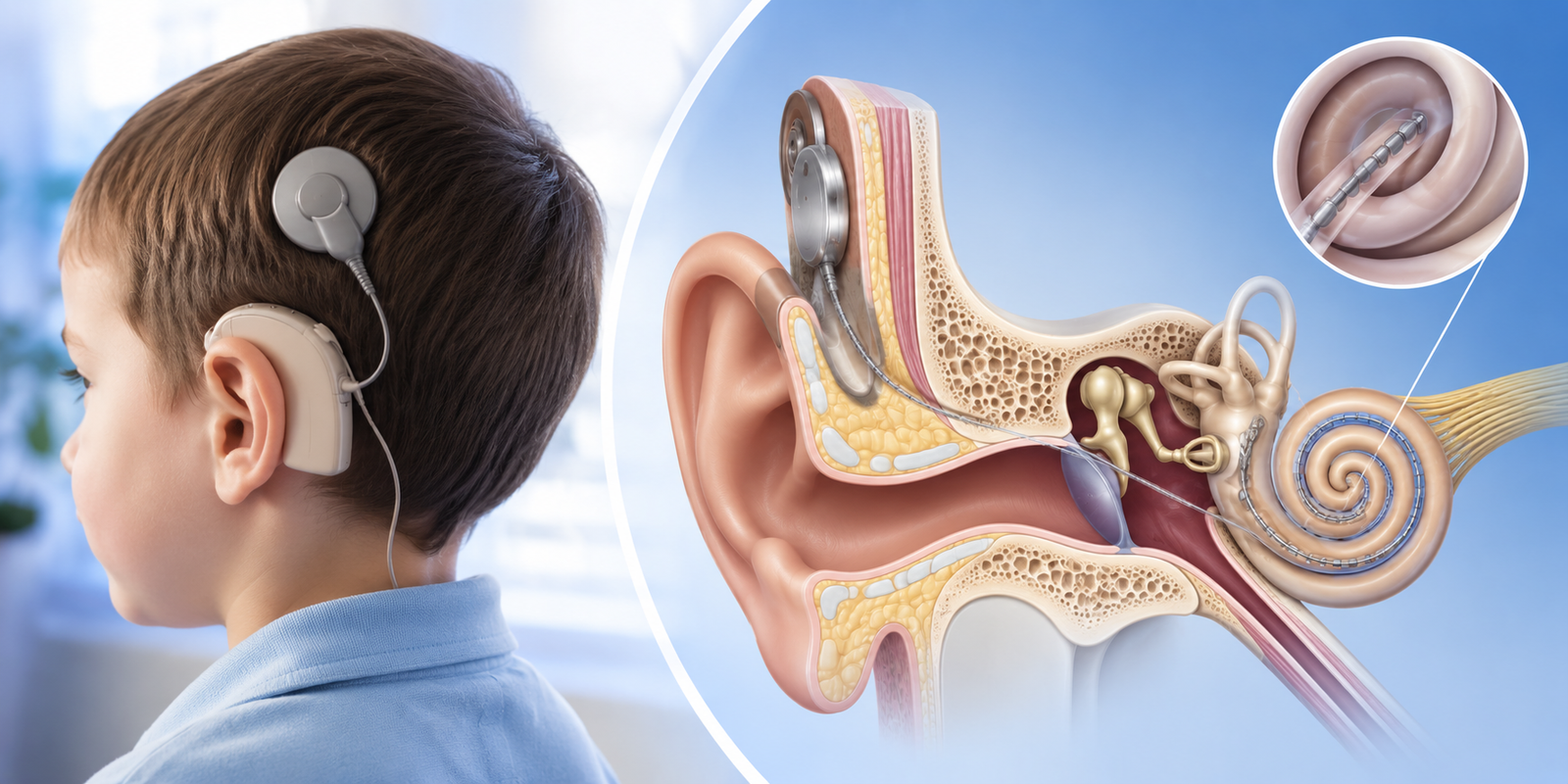
Cochlear Implant Surgery is a specialized procedure for people with severe to profound hearing loss who receive limited benefit from conventional hearing aids. A cochlear implant bypasses damaged parts of the inner ear and directly stimulates the auditory nerve using electrical signals. The system typically consists of an internal implant placed beneath the skin and an external sound processor that captures and processes sounds. The aim is to improve access to sound and support speech and communication.
Patients with Severe Hearing Loss
Individuals with severe to profound sensorineural hearing loss who may not receive sufficient benefit from appropriately fitted hearing aids.
Children with Significant Hearing Loss
Children with severe hearing loss who may benefit from early access to sound to support speech, language, communication, and learning development.
Patients with Limited Hearing Aid Benefit
People who have used hearing aids appropriately but continue to experience significant difficulty understanding speech or communicating in everyday environments.
Comprehensive Hearing Evaluation
Your ENT and audiology team performs hearing tests, speech perception assessments, imaging, and medical evaluations to determine whether cochlear implantation is appropriate.
Cochlear Implant Surgery
Under general anesthesia, the internal implant is surgically placed beneath the skin behind the ear, with an electrode carefully positioned inside the cochlea to stimulate the auditory nerve.
Activation & Hearing Rehabilitation
After the surgical site heals, the external sound processor is fitted and activated. Audiologists then program the device and provide hearing rehabilitation to help the brain adapt to the new electrical signals.
Need Expert Medical Guidance?
Your Treatment Journey
Before Procedure
- You will undergo detailed hearing tests, speech assessments, medical examinations, and imaging when required.
- Your specialist will discuss the expected benefits, limitations, surgical risks, and rehabilitation process.
- The device and treatment plan will be selected according to your hearing needs, age, lifestyle, and clinical assessment.
During Procedure
- Cochlear implant surgery is generally performed under general anesthesia.
- The procedure commonly takes around 2–4 hours, depending on individual circumstances.
- The internal implant is positioned beneath the skin behind the ear, and the electrode array is carefully inserted into the cochlea.
After Procedure
- Mild pain, swelling, or temporary dizziness may occur during the initial recovery period.
- The external sound processor is usually activated after the surgical area has healed, often several weeks after surgery.
- Hearing improvement develops gradually, and regular audiology sessions and rehabilitation are important for adapting to and making the most of the implant.

Get Expert Medical Guidance
Connect with our specialists and receive trusted healthcare support without delays.
Success!
Your consultation request has been submitted.